When I was fifteen, I created a witch.
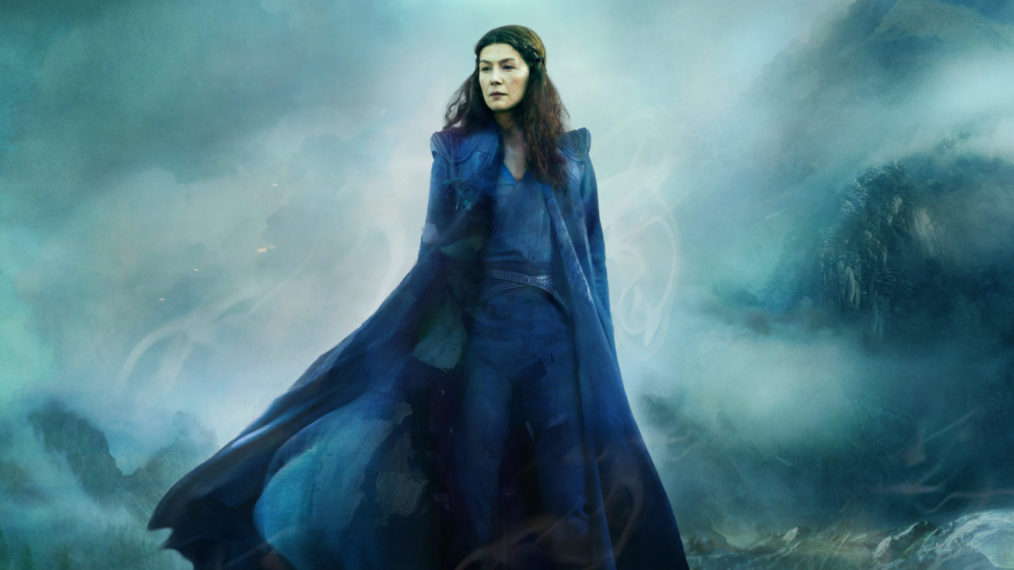
Like some sort of conjurer, I spent a night sitting on the floor, surrounded by my favorite books. I extracted bits and pieces from each, all compelling but never quite enough, and tried to envision a character I’d want to teach me magic. A little bit of Aragorn, a heap of Prince Gwydion, the healthy dollop of Mara Jade. Red hair, grey eyes (because of course), and an extremely fashionable-yet-practical getup reminiscent of Moiraine Sedai in Amazon’s Wheel of Time sixteen years later.
At the end of it, I had a tough, jaded, snarky witch in her mid-30s with a dark past and unfathomable power. She hated children and had a fraught history with just about every other magic-user in the kernel-sized secondary world that I began to brew around her. Reluctantly, oh so reluctantly, she took on a teenaged apprentice in stories secreted away in floppy disks. Crusty. A bit banged up. An enormous pain in the ass.
I adored her. I wanted her to be real.
Obviously, my witch’s teen apprentice was a not-so-subtle self-insert; my writing and daydreams a vehicle for imagined adventures where I looked to a cranky witch for advice, for comfort. As an adult in therapy, I now laugh at myself for essentially having made an imaginary friend in my teens. And why did I need her, anyway? I was no Taran, or Harry Potter, or any of the myriad orphaned waifs of fantasy. I had a loving family that supported me, even if they never really understood me. I thought I knew who I was. So what made me go to such lengths to create not only a world to escape to but also a fictional mentor who sat on my shoulder like some unholy angel-devil amalgam?
The Owl House showed me why.
A show about witches and nerdy teenagers, about a girl who is pushed into conformity and, in trying to escape it, stumbles upon a bizarre, eldritch fantasy world with a cantankerous, morally ambiguous older witch, Eda the Owl Lady. Luz Noceda is very different from me at fourteen, but watching her run around the Boiling Isles still felt like a window to my soul. And Edalyn Clawthorne? She’s as close to my witch as any other character I’ve encountered in fiction. The Owl House does representation in so many good, necessary, important ways—especially when it comes to queer relationships—but its depiction of found family struck the deepest core in me. Because it doesn’t ever ignore the characters’ families of origin, nor the messy ways in which family of origin and family of choice so often intersect.
In the Boiling Isles, Luz finds her place in the Owl House with King and Eda (and Hooty), a place where she doesn’t have to tone down her personality or enthusiasm. Indeed, her effervescent determination leads to positive change within the Isles because even when she’s met with resistance, she has people behind her to back her up. I would have given anything for that sort of acceptance in high school.
Don’t get me wrong, my teenaged life was pretty decent in many ways: I threw myself into figure skating, a sport that I loved; I was in school choir; I wrote plays; I lived a 20-minute train ride away from Chicago; and in high school there were too many kids for me to be singled out or bullied. I was ignored, able to float between cliques, which was an enormous blessing after the constant barbed comments that followed me all through middle school: try-hard, nerd, poser, etc.
But I moved through the world very aware that, in order to make any friends, I needed to mask who I truly was. All through middle school, I was told to temper my enthusiasm, to “chill out,” that the way to make friends was to not talk about the things I loved: Star Wars or Lord of the Rings or Tamora Pierce books. To get people to take me seriously, I had to change the way I dressed and the way I acted. I also had a hearing loss, severe anxiety, and major depressive disorder, which added an extra difficulty level to everything. For years the only place I could truly be myself was in that fantasy world, under the tutelage of my imaginary witch, and for a long time I thought there was no place in the real world for the real me. It took until my early 20s for me to find that sort of acceptance, to find people around whom I didn’t have to hold back parts of myself.
With all those memories running through my head, it made perfect sense to me that Luz would stay in the Boiling Isles. So much so that when it’s later described as “running away” it hit me as kind of wild. How is it running away if she’s found her place? A place where she can be her true self?
Yet when Luz makes that choice to stay, the very first thing she does is text her mom. For all her feelings of alienation and her need to escape Camila’s imposed “reality check,” it’s clear that she loves her mother deeply and wants to share parts of her life with her, even if she relies on cherry-picking parts of that life. When the portal to the human realm is destroyed and she loses the ability to communicate with Camila at the end of season one, it’s a big loss, even as she happily reunites with Eda and King.
The focus in season two shifts to Luz’s efforts to return home to her family, but those efforts never overshadow the fact that by this time, the Clawthornes have become Luz’s family too, a family that is given just as much importance in the storyline. In “Eda’s Requiem,” when Raine asks Eda if she has kids, if Luz is her kid, Eda sadly says Luz has a real family to go back to. But Raine reminds her that Eda is Luz’s real family, even if Luz still needs to find a way back to her mom. The chosen family and the family of origin are intricately connected, both in Eda’s case, when Luz helps her reconnect with her sister and mother, and in Luz’s case, where Eda, King, Amity, et al help her build a new portal door to try and return home.
Of course, none of this eliminates the fundamental disconnect that exists between Camila and Luz, one rendered heartbreakingly clear in “Yesterday’s Lie.” When Luz is only able to connect to the human realm through mirrors and images, she discovers that a basilisk named Vee has assumed her identity, keeping Camila ignorant of Luz’s absence. As the product of a cruel experiment, Vee spent her whole life trapped behind bars until she managed to escape into the human realm. Vee angrily calls out Luz’s running away: “You had a mom that loved you, a home, a life. You had it good, and you still wanted to run away! I didn’t have a choice.” And when Camila discovers that Luz has been in the demon realm this whole time, not by accident but by choice, she’s incredibly hurt. “Did you really hate living with me that much?”
Few things resonated with me quite as strongly as these scenes, as well as when Luz frantically tries to tell Camila that it’s not about her, it never was. For me, it was never about my family so much as the constant, profound sense of exclusion both at home and in the rest of the world. I loved them, but I needed far more than they could give.
I’m still not sure that will ever make sense to my own family, and at first it doesn’t make sense to Camila. But slowly, over the course of season three, she comes to realize her own missteps and how to help Luz with her intense self-doubt. She admits, point-blank, that her biggest mistake was not standing up for Luz when she needed her the most, and trying to change Luz into something she wasn’t. It’s only through this admission that Luz is able to identify what she truly wants, a desire that helps her Palisman take shape:
“All I ever wanted was to be understood.”
It’s all any of us weirdos ever want, but it’s something that is so hard to find, or even articulate. There’s a reason it took her three seasons to figure it out! As a teen, I created a fictional character in the absence of being understood, because I needed that somewhere, if only in my mind. It’s no surprise that, though she lives on in the spirit of every tetchy middle-aged woman in my fiction, my witch quietly faded away once I found my first true community as an adult. A place where real people, magic in their own right, understood every part of me.
We talk, constantly, about works of fiction that we needed as children, and I needed this show at fourteen so badly. I’m so happy for the fourteen-year-olds watching it now, who have so many representations of queer relationships, and types of families, and the fact that you don’t have to forgive your family if they mistreat you without remorse (bye, Odalia!). But I needed this show at 32, also. It helped me understand how I got to where I am with my own family, both chosen and original, and through Eda’s tentative steps back toward her own parents has shown me how to move forward as an adult. Parents and weirdos, together on that cliffside in the series finale. We should all be so lucky.
© 2023 Suzanne Walker